
0
101
近 7 天 21
23.7
生态多维模型
5 个月前
2026-03-11
快速安装与配置
opencode.json写入当前项目的 opencode.json,只对这个仓库生效。
opencode.json
{
  "$schema": "https://opencode.ai/config.json",
  "plugin": ["oh-my-openidea@0.1.18"]
}
写入 ~/.config/opencode/opencode.json,对所有项目生效。
~/.config/opencode/opencode.json
{
  "$schema": "https://opencode.ai/config.json",
  "plugin": ["oh-my-openidea@0.1.18"]
}
若你要在本地改造这个插件,先装到项目里再从本地路径引用。
shell
pnpm add -D oh-my-openideaopencode 启动时会通过内嵌运行时自动加载 npm 依赖并缓存至本地目录,无需手动在全局环境执行安装。

Six minds forged from the depths of human knowledge, each an eternal master of their domain, await your question to summon ideas that push the boundaries of what is known.
Open Research Pipeline · Mix any models · From survey to paper draft
📦 Installation
Quick Start
bunx oh-my-openidea@latest install
Non-interactive mode with API keys:
bunx oh-my-openidea@latest install --no-tui --openai=yes --anthropic=no --antigravity=yes --copilot=no --zai-plan=no --chutes=no --kimi=yes --tmux=no --skills=yes
Then authenticate:
opencode auth login
Optional Zotero library access:
uv tool install zotero-mcp-server
Run ping all agents to verify everything works.
💡 Configuration is stored in
~/.config/opencode/oh-my-openidea.json(or.jsoncfor comments support).
For LLM Agents
Paste this into any coding agent:
Install and configure by following the instructions here:
https://raw.githubusercontent.com/ZeguanXiao/oh-my-openidea/refs/heads/master/README.md
Detailed installation guide: docs/installation.md
Additional guides:
- Antigravity Setup - Complete guide for Antigravity provider configuration
- Tmux Integration - Real-time agent monitoring with tmux
🔬 Meet the Research Council
01. Orchestrator: The Architect of Discovery

|
The one who sees all paths. The Orchestrator is
the lead coordinator for the whole research workflow. Give it a
problem, and it decides which agents should work next, what
information is still missing, and how the pieces should come
together into a strong research direction. In practice, it runs
the full pipeline: clarifies the problem, dispatches parallel
literature searches to @surveyor, hands the corpus
to @synthesizer for gap extraction, generates
3-5 concrete hypotheses itself, sends the strongest candidates
to @critic for novelty/feasibility review, then
calls @architect and @writer to turn
the winning idea into an executable plan and paper outline. It
is the only agent with full delegation authority and is
responsible for deciding when to branch in parallel and when to
keep steps sequential.
|
|
Role: Strategic research coordination and idea synthesis How it works: Multi-stage planner with explicit subagent routing, limited refinement loops, and final synthesis across all intermediate outputs Best Model Traits: Strong long-horizon planning, reliable tool/subagent orchestration, stable structured reasoning, and the ability to compress many intermediate results into clear decisions Prompt: orchestrator.ts |
02. Surveyor: The Cartographer of Knowledge

|
The one who maps the unknown. The Surveyor finds and collects the most relevant papers for your topic. It helps you quickly understand what has already been done, which papers matter most, and where the current limits of the literature are. Its job is deliberately narrow and read-only: search, retrieve, and organize. It runs parallel queries across arXiv via AlphaXiv MCP; prefers recent work by default; separates foundational papers from recent advances; and always returns traceable identifiers such as arXiv IDs so later agents can verify claims instead of relying on vague summaries. |
|
Role: Literature search and paper retrieval How it works: Read-only retrieval agent that fans out across multiple academic sources, compares query variants, and builds a paper corpus with metadata for downstream use Best Model Traits: Fast tool calling, high extraction precision, low hallucination rate on bibliographic details, and good breadth-first search behavior under ambiguous queries Prompt: surveyor.ts |
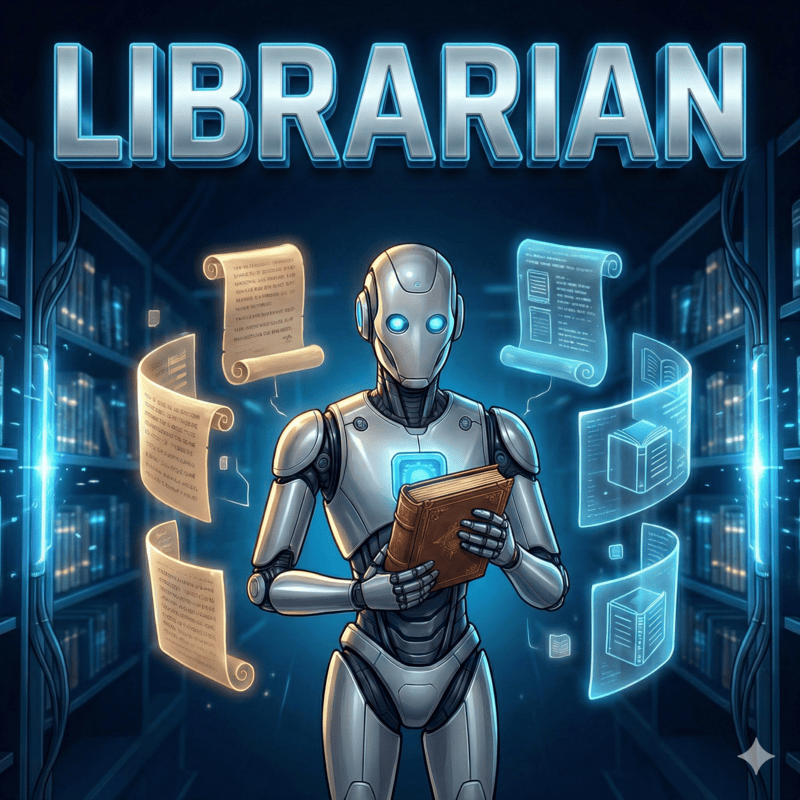
03. Synthesizer: The Weaver of Understanding
|
The one who connects the dots. The Synthesizer
turns a pile of papers into a clear understanding of the field.
It groups results, highlights patterns and disagreements, and
points out open problems that can lead to new research ideas.
Instead of merely summarizing, it builds a research landscape:
themes, trends, recurring limitations, and evidence-backed gaps.
It reads key sections of papers, cross-references claims across
the corpus, and distinguishes between gaps that are unaddressed
because they are genuinely hard and gaps that have simply been
overlooked. If the corpus is missing an important branch, it can
trigger a targeted follow-up search via @surveyor.
|
|
Role: Gap analysis and knowledge synthesis How it works: Corpus-level analyzer that reads paper sections, clusters ideas into themes, surfaces contradictions and blind spots, and outputs evidence-linked research gaps Best Model Traits: Long-context reading, cross-document comparison, disciplined citation use, and strong abstraction ability without drifting away from source evidence Prompt: synthesizer.ts |
04. Critic: The Guardian of Truth

|
The voice of rigorous doubt. The Critic
stress-tests your idea before you invest too much in it. It
looks for weak assumptions, missing baselines, overlap with
prior work, and other reasons the idea might fail novelty or
review standards. Operationally, it behaves like an adversarial
program committee reviewer: it searches for overlapping prior
work, reads candidate papers to verify whether the overlap is
superficial or real, and scores each idea on novelty,
feasibility, significance, clarity, and overall quality. When
needed, it can trigger targeted follow-up literature checks via
@surveyor, but it does not redesign the idea
itself; its purpose is to reject weak directions early and make
promising ones harder to fool yourself about.
|
|
Role: Novelty validation and adversarial review How it works: Evidence-first evaluator that combines prior-work search, paper-level overlap verification, and structured review scoring in a NeurIPS/ICML-style format Best Model Traits: Skeptical reasoning, careful distinction between related and duplicate ideas, strong comparative judgment, and consistency when turning evidence into explicit scores and verdicts Prompt: critic.ts |
05. Architect: The Builder of Methods

|
The one who turns vision into plan. The Architect converts an idea into a concrete experiment plan. It defines datasets, baselines, metrics, ablations, failure cases, and resource needs so you know exactly how to test whether the idea works. It takes a hypothesis that has already survived critique and expands it into an executable methodology: method overview, baseline stack, dataset choices, statistical tests, ablation plan, implementation notes, and realistic compute estimates. It is a leaf agent by design, which means it focuses on turning validated ideas into concrete experimental decisions rather than delegating further. |
|
Role: Methodology and experiment design How it works: Execution planner that translates validated ideas into benchmarkable experiments with concrete baselines, datasets, metrics, ablations, and compute budgets Best Model Traits: High specificity, strong methodological priors, good benchmark literacy, realistic resource estimation, and low tolerance for vague implementation advice Prompt: architect.ts |
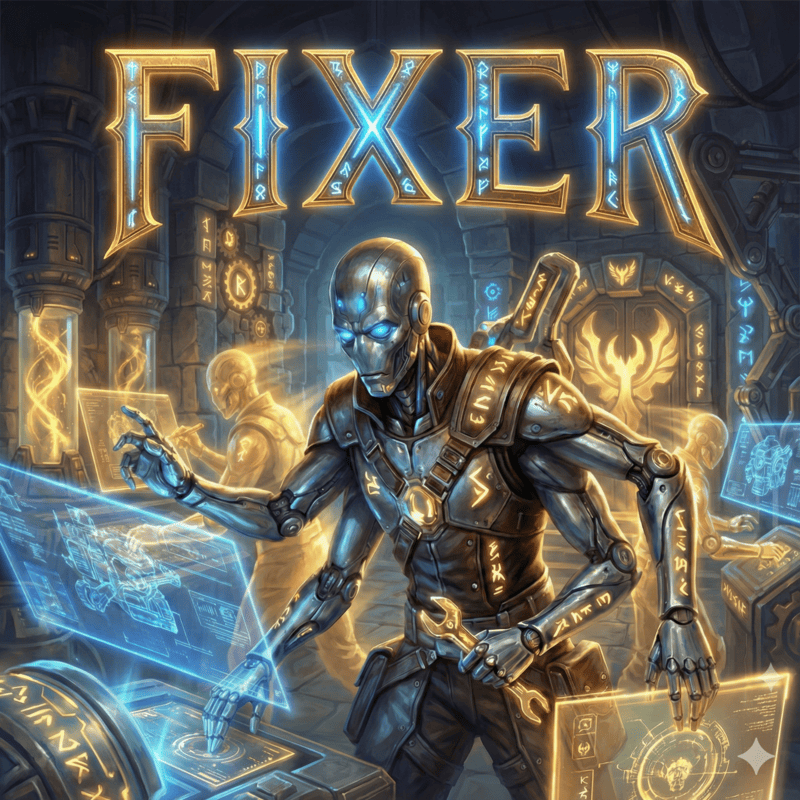
06. Writer: The Voice of Science
|
The one who makes it legible to the world. The Writer turns your research into a clear paper draft. It helps organize the story, sharpen the main message, and present the method and results in a way that is easy for readers and reviewers to follow. Unlike the other agents, it is intentionally execution-only: no external search, no tool-driven fact hunting, and no subagent delegation. It assumes the research content has already been established upstream and focuses on turning that content into paper structure, abstract, introduction, related work narrative, and section-level draft text that follows mainstream ML conference conventions. |
|
Role: Research writing and paper structure How it works: Context-conditioned writer that receives finalized idea and methodology, then produces publication-style outlines and drafts without inventing unsupported claims Best Model Traits: Strong academic writing quality, good discourse organization, precise controllability, and discipline about staying within provided evidence instead of fabricating results Prompt: writer.ts |
📚 Documentation
- Quick Reference - Presets, Skills, MCPs, Tools, Configuration
- Installation Guide - Detailed installation and troubleshooting
- Cartography Skill - Custom skill for repository mapping + codemap generation
- Antigravity Setup - Complete guide for Antigravity provider configuration
- Tmux Integration - Real-time agent monitoring with tmux
📄 License
MIT